

Books That Help Me Monitor My Children When They’re Sick
Autonomous wellness is more than the wellness of our own bodies. As parents, we immediately become ac countable for someone else’s wellbeing, but with small children, how can we figure out what’s going on without hitting up good ol Google!? I mean, with the amount of blogs and WebMds, and Healthline, there is so much information out there that can become so convoluted, you log off feeling more confused than when you logged on.
There are plenty of resources that we can use when it comes to obtaining a better perception on our children’s health. Even ours. This isn’t to say or replace the need for our favorite pediatricians, naturopaths, or nurse practitioners expertise, but it’s to help ease your mind, empower you as a parent, and give you practical tools now that you can start using today. I’m going to start with a couple of books that I really enjoy and use as a reference. These are always at the ready and easily accessible in my bookshelf. So I will start with books in this article and then in the next the actual tools I use and links.
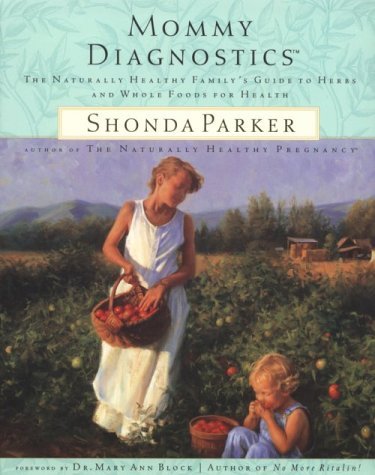
Mommy Diagnostics by Shonda Parker:
This book is categorized by phase of life all the way from what they call “little sprouts” to the “golden years”.
Here is the synopsis: Professional herbalist, Shonda Parker, teaches mothers what can be safely treated at home, how to treat with nutritional and botanical medicine, and when to seek professional help. Traditional medicine has given us shots, pills, and expensive treatments. Shonda provides moms with homegrown remedies that are easily available, inexpensive, and that work wonders!
As a revival of interest in natural health care occurs, this book is designed to provide a continuing education class for mothers as family health practioners. Mothers observe, evaluate, and even medicate their children on a daily basis. By nature, mothers become family health practioners, but seek other opinions when appropriate. This book will equip any mother to address her family's day-to-day health needs with confidence and is critical for every mother who is focused on raising healthy kids.
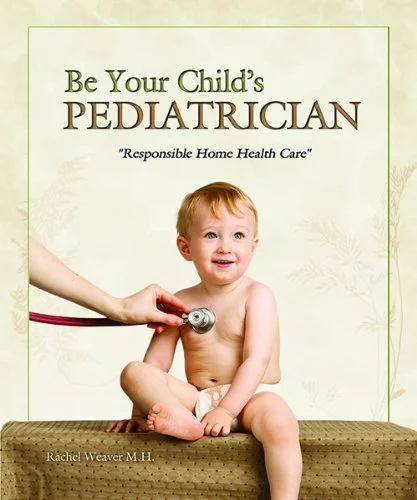
2. Be Your Child’s Doctor by Rachel Weaver M.H.
This one is one of my favorites as it comes PACKED with making your own medicine recipes along with dosages, ingredients, where to get ingredients to make these medinces, and so much more about storage and keep. It also talks to you about what to listen for and the different types of interventions that could come up through the course of the illness.
Here is the synopsis: When I was growing up, my mother had a small book on how to care for your child’s health. It was printed before the late 50’s or early 60’s, because it was there by the time I was eight and reading everything I could get my hands on. I would sit for a long time studying the pictures and reading what they said about each disease. By the time I became a mother, I could not find my mother’s book nor could I find one on the market. To me, this information is an important part of mothering and doctoring my family. If I am familiar with the rashes, where they start and when they are contagious, etc, I am not nearly as likely to run off to the doctor. If I also know what to expect for the course of the disease and realize that there are things that I can do to make my child more comfortable, I become more confident. Read the information and study the pictures and be prepared to deal with diseases as they come.
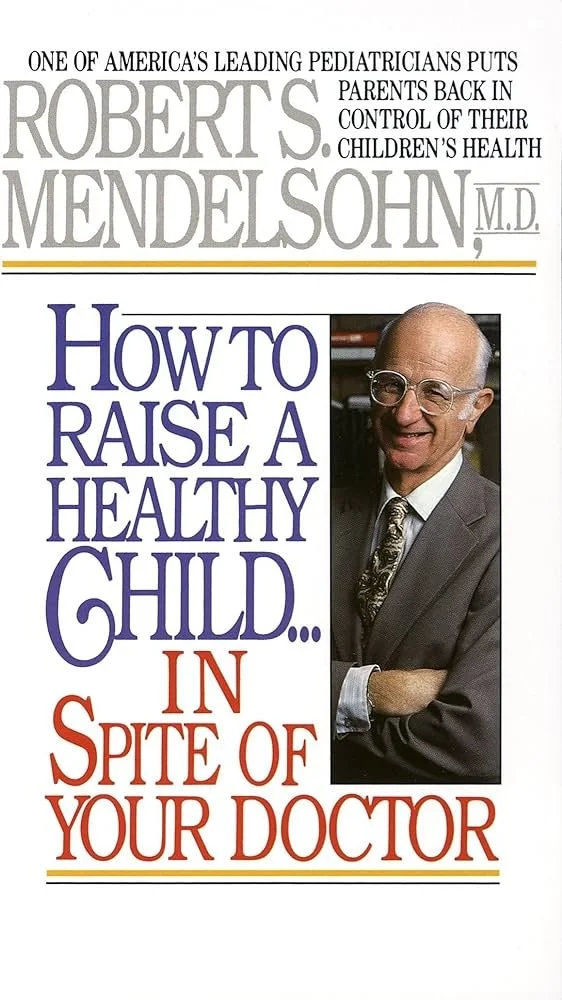
3. How To Raise Your Child In Spite of Your Doctor by Roberts Mendelsohn, M.D.
This is more of a chapter book written by a pediatrician that takes you through “diagnosis of colds and flus, childhood illnesses, vision and hearing problems, allergies, and more. PLUS, a complete section on picking the right doctor for your child, step-by-step instructions for knowing when to call a doctor, and much more.”. He starts the book with the reminder that not everything needs to be escalated to the the emergency room or the pediatricians office and really puts parents in the driver seat of the care of our children. Click the image to purchase!
There are a few more, probably about two, that I could recommend but I want to give you the basics and the 3 that pack the most punch when getting started with this. I understand it can be overhwleming, I mean there was time I’d much rather call the doctors office and make a visit that I would later find out was unnecessary, but erring on the side of caution is never wrong to put the mind at ease. Except now, we have information at our finger tips, passed down from generations that knew what to do with the common illnesses and diseases. I want for you to be able to get off Google and the rabbit hole and really feel empowered to remedy your sweet babies.
Next post will be directly related to the exact tools that I use to monitor my kids such as a stethascope, homeopathy, herbs, and other tools.
Until then, happy Momming!
X,
Gi